My Sentence Is....
My Passion Is....
Thursday, September 25, 2014

Monday, September 22, 2014
Tuesday, September 16, 2014
Blog Assignment #5
Personal Learning Networks
This class is the first to introduce PLNs to me; PLN stands for "Personal Learning Network". Personal learning networks help teachers and students gather multiple sources of information on a certain topic, from one common place. The components of a PLN include the people and tools you receive assistance from. Some forms of PLNs include twitter, facebook, and/or blogs. For my PLN I chose to use Twitter. To build my PLN I started following specific current educators that also use twitter. Along with older teachers and peers in my past, my PLN will continue to grow and become more useful as time passes. I can use my PLN to ask questions I don't know answers to, and to get new ideas from resources added by others.

This class is the first to introduce PLNs to me; PLN stands for "Personal Learning Network". Personal learning networks help teachers and students gather multiple sources of information on a certain topic, from one common place. The components of a PLN include the people and tools you receive assistance from. Some forms of PLNs include twitter, facebook, and/or blogs. For my PLN I chose to use Twitter. To build my PLN I started following specific current educators that also use twitter. Along with older teachers and peers in my past, my PLN will continue to grow and become more useful as time passes. I can use my PLN to ask questions I don't know answers to, and to get new ideas from resources added by others.

Sunday, September 14, 2014
Using Multiple Search Engines
I always say, "Google is my best friend!". Any time I get on the internet, whether it be by phone, desktop, or Ipad, Google is the first site pop up. Sometimes even if I know the site I need to go to I type "Google.com" first, out of habit. As an assignment we were required to look up and test 8 other search engines. The first being "Wolframalpha.com". After only 5 minutes, I was hooked. It is so convenient! The organization is immaculate, and the information is extremely thorough and specific. However, I do feel as though it is more of a biographical research type of site instead of a general search engine site, such as Google.
My other sites I found by looking up "Search engines for beginners" because although I use technology quite often, I do not feel as though I have it even close to figured out yet.
Site #2: From a list for beginners I found, "Dogpile.com". This search engine is very similar to Google. It has all of the same options such as images, videos, shopping, etc. It gave results in a timely manner and they were well organized.
Site #3: "AskJeeves.com", I used nearly every day as a child. I was introduced to this search engine in 2nd grade and used it especially for my TAG class. This site is also very similar to Google in that you can specify your search with image, news, videos, etc. However the layout seems to be easier to read, a reason my teacher chose for us to use it.
Site #4: "Bing", is a very well known search engine. This search engine is quick and gives many specific links for the topic searched. It would seem to be very useful for Microsoft users.
Site #5:, "Yippy.com", is especially good for academic searches or government related topics. Search time was efficient, and the pop ups were limited.
Site #6: "Webopedia.com", is a great search engine for technology related topics. It is a resource site for encyclopedic information on technology and computers. Great for non-technological people!
Site #7: "Archive.org" is good for going back to past web posts and websites. This search engine allows us to go back to specific events or times without having to sift through all of the results from Bing or Google. Very well organized, and easy to use after some time.
Site #8: "Mahalo.com" is a site powered by people. This means actual people go through various site of information and research to find the best and most specific results. There are many less results, but they are very specific and well researched. I enjoy this site because it has suggestions in categories for searches. It seems to be very easily understood and used.

My other sites I found by looking up "Search engines for beginners" because although I use technology quite often, I do not feel as though I have it even close to figured out yet.
Site #2: From a list for beginners I found, "Dogpile.com". This search engine is very similar to Google. It has all of the same options such as images, videos, shopping, etc. It gave results in a timely manner and they were well organized.
Site #3: "AskJeeves.com", I used nearly every day as a child. I was introduced to this search engine in 2nd grade and used it especially for my TAG class. This site is also very similar to Google in that you can specify your search with image, news, videos, etc. However the layout seems to be easier to read, a reason my teacher chose for us to use it.
Site #4: "Bing", is a very well known search engine. This search engine is quick and gives many specific links for the topic searched. It would seem to be very useful for Microsoft users.
Site #5:, "Yippy.com", is especially good for academic searches or government related topics. Search time was efficient, and the pop ups were limited.
Site #6: "Webopedia.com", is a great search engine for technology related topics. It is a resource site for encyclopedic information on technology and computers. Great for non-technological people!
Site #7: "Archive.org" is good for going back to past web posts and websites. This search engine allows us to go back to specific events or times without having to sift through all of the results from Bing or Google. Very well organized, and easy to use after some time.
Site #8: "Mahalo.com" is a site powered by people. This means actual people go through various site of information and research to find the best and most specific results. There are many less results, but they are very specific and well researched. I enjoy this site because it has suggestions in categories for searches. It seems to be very easily understood and used.

C4T Summary
"Wisdom Begins with Wonder"
The teacher I was assigned to was Mr. Rice, teacher at an Indian Reservation in Washington. His blog is about improving education in the classroom in every way possible. He has posts regarding standardized tests, technology in the classroom, and different teaching methods. For my posts I commented on the most recent posts. The first from June 4, 2014 and the second from February 21, 2014. In my posts I made sure I introduced myself and my reasons from commenting. I enjoyed his posts because he seems to be very passionate about ensuring his students are learning in his classroom. He seems to really care about being his best to help them become their best.
June 4, 2014
"My name is Tiffany Wake, and I am an elementary education major at the University of South Alabama. One of my classes requires me to comment on assigned blogs each week, and for this week I was assigned yours. I think your methods for teaching are exactly what education needs! Hands on, fun activities that keep the students engaged is exactly what we are being told to do in our classrooms for the future. In high school we had to take the same test you are speaking of, and as test time got closer we got stuck using the book reviews and worksheets much more than desired. I felt as though it took from my learning experience and I was doing more memorizing rather than learning. I wish you the best of luck in your with these exams, and your classes. Keep pushing for the, “Real-world learning” you aren’t alone in your efforts!
Tiffany Wake"
February 21, 2014
"Mr. Rice, To better ensure I got the entire message of the song, I looked up the lyrics. Just as fellow students have posted I believe the lyrics are not appropriate for younger ages, but the message is fit for all. I am also, an eternal optimist, always hoping for and going for the best. I believe attitudes can be contagious, and you never know if you are the one person to send a positive message someone’s way. Teachers sometimes must be a confidant, listening ear, mentor, and educator all at once. They hope to instill good morals and positivism in their students so they can have/make a better future. Tests and grades shouldn’t be the only way a students education is measured. Children should be learning for the sake of bettering the future, not for the sake of a 4.0 and scholarship.
Tiffany Wake"
One post that stuck out most to me from his blog was this video. It has a very strong message to send about education. As he states in his post, this video does contain some profanity and is not for all readers.
Blue Scholars "Commencement Day"
![Socrates marble sculpture with quote]()
The teacher I was assigned to was Mr. Rice, teacher at an Indian Reservation in Washington. His blog is about improving education in the classroom in every way possible. He has posts regarding standardized tests, technology in the classroom, and different teaching methods. For my posts I commented on the most recent posts. The first from June 4, 2014 and the second from February 21, 2014. In my posts I made sure I introduced myself and my reasons from commenting. I enjoyed his posts because he seems to be very passionate about ensuring his students are learning in his classroom. He seems to really care about being his best to help them become their best.
June 4, 2014
"My name is Tiffany Wake, and I am an elementary education major at the University of South Alabama. One of my classes requires me to comment on assigned blogs each week, and for this week I was assigned yours. I think your methods for teaching are exactly what education needs! Hands on, fun activities that keep the students engaged is exactly what we are being told to do in our classrooms for the future. In high school we had to take the same test you are speaking of, and as test time got closer we got stuck using the book reviews and worksheets much more than desired. I felt as though it took from my learning experience and I was doing more memorizing rather than learning. I wish you the best of luck in your with these exams, and your classes. Keep pushing for the, “Real-world learning” you aren’t alone in your efforts!
Tiffany Wake"
February 21, 2014
"Mr. Rice, To better ensure I got the entire message of the song, I looked up the lyrics. Just as fellow students have posted I believe the lyrics are not appropriate for younger ages, but the message is fit for all. I am also, an eternal optimist, always hoping for and going for the best. I believe attitudes can be contagious, and you never know if you are the one person to send a positive message someone’s way. Teachers sometimes must be a confidant, listening ear, mentor, and educator all at once. They hope to instill good morals and positivism in their students so they can have/make a better future. Tests and grades shouldn’t be the only way a students education is measured. Children should be learning for the sake of bettering the future, not for the sake of a 4.0 and scholarship.
Tiffany Wake"
One post that stuck out most to me from his blog was this video. It has a very strong message to send about education. As he states in his post, this video does contain some profanity and is not for all readers.
Blue Scholars "Commencement Day"

Blog Assignment #4
What Do We Need to Know About Asking Questions to be an Effective Teacher?
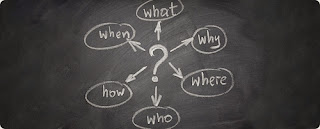
Principal Ben Johnson tells the truth no teacher wants to admit, students do not always listen or pay attention. He says throughout his observations he noticed some children never answered even one question they just waited for others to do it for them. Therefore, we must get creative with our questioning process. Ben Johnson's blog says an effective method he researched was on of Mary Budd Rowe. She recommends asking a question and waiting three seconds to call a student's name to answer. She says this gives students time to think about the answer, and nothing else. I believe this would be an effective way of questioning because then the students would be trying to figure out the answer instead of looking around the room for other hands, or hoping not to be called on. Also, the random names will help keep students focused and ready to answer, if called upon.
Right Way to Ask Questions
Asking Questions to Improve Learning
One point that stuck out to me in this article was that teachers should avoid asking questions that could have the answer within them. As a student, I am guilty of favoring these questions on tests. I know they hinder my learning though because I don't retain that information. I am too concerned with knowing I got at least that one right. If students don't have to actually learn the material to pass, they won't. These days students get so consumed with passing they forget the whole purpose of school is learning and building skills for their future. As a teacher, I hope to stay away from these questions so I can ensure my students will remember what school is for.
Asking Questions to Improve Learning
Three Ways to Ask Better Questions in the Classroom
Maryellen Weimer's first point says to, "Prepare questions". I believe this will be the most helpful in my teaching. Preparing questions before class will help me ensure I am asking and or teaching the right things. By preparing questions early, I can look them over and make changes, or omit some if I feel they don't help the lesson. Having questions prepared, I can spend more time focusing on my students and ensuring they are paying attention and truly understanding the lesson. If we already know the questions, then there should be no confusion on what we are teaching and what we hope the students will learn. Her second point "Play with questions," gives the idea of keeping a question unanswered for a little while to keep the thinking process going. This could be helpful for discussions. Giving the students time to think more into their answers could bring up better and longer discussions. The final point given was, "Preserve good questions," meaning save some questions that were asked, to help. She says it also shows that the teacher remembered and took into account what the students say and do.
Three Ways to Ask Better Questions
Asking Better Questions
This video discusses the difference in close ended questions and open ended questions, and how they effect the learning. She says open ended questions are more challenging and require more thinking, but give so much more on the information. Close ended questions stop the students at yes or no and requires no more thinking than that. Open ended questions require students to think and tell more about their answers and beliefs. The example she gives is a questions about Rosa Parks and her effects on society after refusing to give up her seat. Keeping this question open ended allows for many more answers and discussions to come about. Learning is not just about what the teachers have to say and offer, but also about the surroundings and students' offerings.
Asking Better Questions
Principal Ben Johnson tells the truth no teacher wants to admit, students do not always listen or pay attention. He says throughout his observations he noticed some children never answered even one question they just waited for others to do it for them. Therefore, we must get creative with our questioning process. Ben Johnson's blog says an effective method he researched was on of Mary Budd Rowe. She recommends asking a question and waiting three seconds to call a student's name to answer. She says this gives students time to think about the answer, and nothing else. I believe this would be an effective way of questioning because then the students would be trying to figure out the answer instead of looking around the room for other hands, or hoping not to be called on. Also, the random names will help keep students focused and ready to answer, if called upon.
Right Way to Ask Questions
Asking Questions to Improve Learning
One point that stuck out to me in this article was that teachers should avoid asking questions that could have the answer within them. As a student, I am guilty of favoring these questions on tests. I know they hinder my learning though because I don't retain that information. I am too concerned with knowing I got at least that one right. If students don't have to actually learn the material to pass, they won't. These days students get so consumed with passing they forget the whole purpose of school is learning and building skills for their future. As a teacher, I hope to stay away from these questions so I can ensure my students will remember what school is for.
Asking Questions to Improve Learning
Three Ways to Ask Better Questions in the Classroom
Maryellen Weimer's first point says to, "Prepare questions". I believe this will be the most helpful in my teaching. Preparing questions before class will help me ensure I am asking and or teaching the right things. By preparing questions early, I can look them over and make changes, or omit some if I feel they don't help the lesson. Having questions prepared, I can spend more time focusing on my students and ensuring they are paying attention and truly understanding the lesson. If we already know the questions, then there should be no confusion on what we are teaching and what we hope the students will learn. Her second point "Play with questions," gives the idea of keeping a question unanswered for a little while to keep the thinking process going. This could be helpful for discussions. Giving the students time to think more into their answers could bring up better and longer discussions. The final point given was, "Preserve good questions," meaning save some questions that were asked, to help. She says it also shows that the teacher remembered and took into account what the students say and do.
Three Ways to Ask Better Questions
Asking Better Questions
This video discusses the difference in close ended questions and open ended questions, and how they effect the learning. She says open ended questions are more challenging and require more thinking, but give so much more on the information. Close ended questions stop the students at yes or no and requires no more thinking than that. Open ended questions require students to think and tell more about their answers and beliefs. The example she gives is a questions about Rosa Parks and her effects on society after refusing to give up her seat. Keeping this question open ended allows for many more answers and discussions to come about. Learning is not just about what the teachers have to say and offer, but also about the surroundings and students' offerings.
Asking Better Questions

Sunday, September 7, 2014
Blog Assignment #3
How Can You Provide Meaningful Feedback to Your Peers?
Peer editing takes place in classrooms of various ages and sizes. It can be a difficult task; we must always check that we are commenting on and correcting posts appropriately. For this blog post, the links provided gave information and tips on how to provide meaningful feedback to peers. Each link provided different materials, examples, and scenarios to effectively help students with peer editing.
The first link gave a description of what peer editing is. The video discusses the three steps for peer editing. The first step it talks about is complimenting. Always be sure to compliment the writer on what was done well in the post before beginning to critique. The next link was a slide show that also discussed these steps. Besides the first step, this link also mentioned the second rule suggestions. It provides us with examples of how to edit writings by complimenting and giving a suggestion on how to fix or enhance the writing. For example, "Your post on peer editing and corrections was very well written, but to help be more effective try adding some links to support your statements." Sometimes we do not realize there could be a better way to write something so it is nice to get feedback and suggestions from others. The final video link of the students was my favorite for it added humor to the lesson, and allowed the kids to have some fun. This video covered all of the steps as well, but the one I focused on was the final step, corrections. I enjoyed seeing the children act out different examples for giving corrections. Picky Patty was my favorite because it showed that by pointing out every mistake with no compliments or nice suggestions the other student is likely to get upset. Some people are easily embarrassed so it is nice to give corrections with positive attitudes so the student doesn't become offended and defensive. These videos were very informative, and gave me many ideas for my peer reviews yet to come.
![Peer editing acronym]()
Peer editing takes place in classrooms of various ages and sizes. It can be a difficult task; we must always check that we are commenting on and correcting posts appropriately. For this blog post, the links provided gave information and tips on how to provide meaningful feedback to peers. Each link provided different materials, examples, and scenarios to effectively help students with peer editing.
The first link gave a description of what peer editing is. The video discusses the three steps for peer editing. The first step it talks about is complimenting. Always be sure to compliment the writer on what was done well in the post before beginning to critique. The next link was a slide show that also discussed these steps. Besides the first step, this link also mentioned the second rule suggestions. It provides us with examples of how to edit writings by complimenting and giving a suggestion on how to fix or enhance the writing. For example, "Your post on peer editing and corrections was very well written, but to help be more effective try adding some links to support your statements." Sometimes we do not realize there could be a better way to write something so it is nice to get feedback and suggestions from others. The final video link of the students was my favorite for it added humor to the lesson, and allowed the kids to have some fun. This video covered all of the steps as well, but the one I focused on was the final step, corrections. I enjoyed seeing the children act out different examples for giving corrections. Picky Patty was my favorite because it showed that by pointing out every mistake with no compliments or nice suggestions the other student is likely to get upset. Some people are easily embarrassed so it is nice to give corrections with positive attitudes so the student doesn't become offended and defensive. These videos were very informative, and gave me many ideas for my peer reviews yet to come.

Monday, August 25, 2014
Blog Assignment #2
What Will Teaching in the 21st Century be Like?
1) I believe the central message of this video was to show how not to use technology in the classroom. The professor utilized the technology, but failed to incorporate the class itself. Throughout the video all he did was use power points, and he stayed behind the desk where no one could see. Therefore, the students failed to learn. His lack of class participation showed in the final minute of the video, as students couldn't even recognize which song was playing let alone what dance to do. I agree with the conclusion that although power point can be useful and easier, I feel class participation would have been more useful and successful for this class. It is very easy to get bored reading slide after slide, teachers need to be sure to incorporate other techniques. Another option the professor could have used was having the slides up with the footsteps shown, but partnering the students to try it themselves as well.
2) Roberts believes teaching in the 21st Century means utilizing all of our technological resources, but use must first be taught. Throughout the presentation, he brings up the questions how, where, and why not? How do you engage instead of simply entertain? Where is the center of knowledge now held? Why not use cell phones, Ipods, and social medias as aids in the classroom? I agree with his arguments. I believe technology in its entirety should be used in the classroom, but correct use should be taught. I feel that knowledge is straying away from teacher being the sole providers, just as Roberts stated in the beginning of the video. As a student, Google is the first site I go to when looking up anything. However, I do not know how to limit my search results or word my questions for the most accurate answers because I was never taught how. If technology was more utilized than scrutinized in the classroom students would be better equipped. Technology can be seen as simple entertainment at times because we aren't aware of its real Google, Wikipedia, and Blogger give us the opportunity to see multiple perspectives and or facts all at once. By learning to use technology for engagement, instead of entertainment, I will be able to help my students do the same. Teaching how to use search engines, and create blogs or video lessons will enable them to learn much more than just what I can teach in one class.
3) The video discusses the student's process and journey through one of his classes, where the professor give the few lectures and there is no textbook. The question is asked, "Why does the networked student even need a teacher?" and throughout the video I caught myself wondering the same thing. It is said the professor gives very few lectures, and uses technology as the main source. After watching the video a second time, paying close attention to the end and beginning, it becomes clear why the teacher is needed. The teacher may not give many lectures, but that is because she provided the sources necessary without them. She provided the building blocks, such as other students, links to databases, and required these students utilize the technology given. Without this teacher during these things this student probably wouldn't have learned how to use the RSS or that he could hear podcasts of the professor all over the country on his Ipod, for free. This teacher enabled her students to embrace and engage in technology so they could further use these resources in other classes in future experiences.
4) Vickie Davis' thesis is that the teacher shouldn't expect to be the only educator in his or her classrooms, students, and other teachers from all over should be as well. I believe Vickie Davis' method of teaching is very interesting and rewarding for students. Her ability to have students engage and interact with other students not only is her classroom but in classrooms all over is very successful. If a student is capable of teaching another person how to do something than there is no question that he or she has master that objective. The students interacting with students in other countries is interesting because they can see what is going on at other schools and places not even close to them. If a teacher allows others to be the informant at times then the opportunities and objectives to learn are limitless.
5)I have never heard of this method of teaching. As I watched and learned about the method, I was torn between whether it would help or hurt the students in their learning. In the end, I felt this method would be less useful to me as a teacher. As an intern at a school already, I have seen the downside to relying on school things begin done at home. The first con I see to this method is that not all students have access to computers at home. The video said it would be acceptable for those students to come in and do the assignments in the morning, but that could lead to students being a different places in the lessons. That also points out who may or may not have access to computers at home which could lead to other issues with students. Also, in my experience, not all parents are willing to, or capable of, ensuring the students actually do the work or follow through with the assignments. Some feel it is the teacher's job to ensure students learn it in class. If those students don't do the work at home, they will come in behind on the lessons, setting different paces.
1) I believe the central message of this video was to show how not to use technology in the classroom. The professor utilized the technology, but failed to incorporate the class itself. Throughout the video all he did was use power points, and he stayed behind the desk where no one could see. Therefore, the students failed to learn. His lack of class participation showed in the final minute of the video, as students couldn't even recognize which song was playing let alone what dance to do. I agree with the conclusion that although power point can be useful and easier, I feel class participation would have been more useful and successful for this class. It is very easy to get bored reading slide after slide, teachers need to be sure to incorporate other techniques. Another option the professor could have used was having the slides up with the footsteps shown, but partnering the students to try it themselves as well.
2) Roberts believes teaching in the 21st Century means utilizing all of our technological resources, but use must first be taught. Throughout the presentation, he brings up the questions how, where, and why not? How do you engage instead of simply entertain? Where is the center of knowledge now held? Why not use cell phones, Ipods, and social medias as aids in the classroom? I agree with his arguments. I believe technology in its entirety should be used in the classroom, but correct use should be taught. I feel that knowledge is straying away from teacher being the sole providers, just as Roberts stated in the beginning of the video. As a student, Google is the first site I go to when looking up anything. However, I do not know how to limit my search results or word my questions for the most accurate answers because I was never taught how. If technology was more utilized than scrutinized in the classroom students would be better equipped. Technology can be seen as simple entertainment at times because we aren't aware of its real Google, Wikipedia, and Blogger give us the opportunity to see multiple perspectives and or facts all at once. By learning to use technology for engagement, instead of entertainment, I will be able to help my students do the same. Teaching how to use search engines, and create blogs or video lessons will enable them to learn much more than just what I can teach in one class.
3) The video discusses the student's process and journey through one of his classes, where the professor give the few lectures and there is no textbook. The question is asked, "Why does the networked student even need a teacher?" and throughout the video I caught myself wondering the same thing. It is said the professor gives very few lectures, and uses technology as the main source. After watching the video a second time, paying close attention to the end and beginning, it becomes clear why the teacher is needed. The teacher may not give many lectures, but that is because she provided the sources necessary without them. She provided the building blocks, such as other students, links to databases, and required these students utilize the technology given. Without this teacher during these things this student probably wouldn't have learned how to use the RSS or that he could hear podcasts of the professor all over the country on his Ipod, for free. This teacher enabled her students to embrace and engage in technology so they could further use these resources in other classes in future experiences.
4) Vickie Davis' thesis is that the teacher shouldn't expect to be the only educator in his or her classrooms, students, and other teachers from all over should be as well. I believe Vickie Davis' method of teaching is very interesting and rewarding for students. Her ability to have students engage and interact with other students not only is her classroom but in classrooms all over is very successful. If a student is capable of teaching another person how to do something than there is no question that he or she has master that objective. The students interacting with students in other countries is interesting because they can see what is going on at other schools and places not even close to them. If a teacher allows others to be the informant at times then the opportunities and objectives to learn are limitless.
5)I have never heard of this method of teaching. As I watched and learned about the method, I was torn between whether it would help or hurt the students in their learning. In the end, I felt this method would be less useful to me as a teacher. As an intern at a school already, I have seen the downside to relying on school things begin done at home. The first con I see to this method is that not all students have access to computers at home. The video said it would be acceptable for those students to come in and do the assignments in the morning, but that could lead to students being a different places in the lessons. That also points out who may or may not have access to computers at home which could lead to other issues with students. Also, in my experience, not all parents are willing to, or capable of, ensuring the students actually do the work or follow through with the assignments. Some feel it is the teacher's job to ensure students learn it in class. If those students don't do the work at home, they will come in behind on the lessons, setting different paces.

Friday, August 22, 2014
Blog Assignment #1
What About EDM310?
I have heard many things about EDM310. Some of what I have heard about EDM310 are that it is difficult, but useful. It is difficult because it is a large amount of work, but very useful to help teach organization and better use of technology in your classes.
My fear,as an avid procrastinator, is that I will fall behind. There is a lot of work that comes with this course. I am worried that if I put anything off I will not complete everything on time. Staying focused will be a very beneficial for this course.
I expect EDM310 to be the same as other college courses with strict deadlines and workload. I think it may be a little more difficult than other classes because my technological skills are limited. This class will call for plenty of practice.
Like I said, I believe my biggest difficulty will be staying on top of my assignments. Setting aside times for me to complete the work I believe will help me to stay ahead or on time. Keeping a strict schedule always helps me to feel more prepared and confident. As long as I pay attention to deadlines I feel confident I can succeed in this course.
I don't have any questions for this course just yet, but I am sure plenty are soon to come.
I have heard many things about EDM310. Some of what I have heard about EDM310 are that it is difficult, but useful. It is difficult because it is a large amount of work, but very useful to help teach organization and better use of technology in your classes.
My fear,as an avid procrastinator, is that I will fall behind. There is a lot of work that comes with this course. I am worried that if I put anything off I will not complete everything on time. Staying focused will be a very beneficial for this course.
I expect EDM310 to be the same as other college courses with strict deadlines and workload. I think it may be a little more difficult than other classes because my technological skills are limited. This class will call for plenty of practice.
Like I said, I believe my biggest difficulty will be staying on top of my assignments. Setting aside times for me to complete the work I believe will help me to stay ahead or on time. Keeping a strict schedule always helps me to feel more prepared and confident. As long as I pay attention to deadlines I feel confident I can succeed in this course.
I don't have any questions for this course just yet, but I am sure plenty are soon to come.

Thursday, August 21, 2014
Practice Blog Post
Who am I? Why do I want to be an educator? What does an educator do in his or
her practice? What are my passions?
Name: Tiffany Wake
Why teach?: Loved teaching as a child. A child with down syndrome came into my life at 14 which sparked my love for special needs.
Educators role: Shape the future. Groundwork for how and what people learn.
My passions: my family, friends, and traveling.
Hello, my name is Tiffany Wake. Growing up I always loved to play school,as time passed, my love for teaching children grew. At 14 I met a child with down syndrome to say she changed my life would be an understatement. Because of her, I decided to teach children with special needs when I got older. An educator helps lay the groundwork for how and what people will learn. No matte the level of an educator, they are still helping to enhance the future passing along knowledge. My family is the most important thing I have in my life. I have one older brother married with one little girl. My mother and father live in the house we were raised in, on the line of Louisiana. Our small town life made us very close and I go home at least once every month for family dinner. My friends are my support group and people I make all of my favorite memories with. Traveling is a huge passion for all of us. I love new places and exploring. I feel like every new experience is just another chance to learn.
As stated earlier, I am a small town gal. I was born and raised in Pearlington, MS. Growing up we had one post office, one school, and one community center. Needless to say,everyone knew everything. While I loved my family and friends back home, I wanted to venture out and have new experiences. A friend of mine came to South the year before me, and told me to come visit campus. I came and loved everything about the campus and students. The distance was just enough for me to still watch my niece grow up and have my new adventures.

I really like to run outside and go places. Througout this semester I hope to get better at not procrastinating. Upon graduation I hope to move to Hawaii to teach for a few years before settling down.
her practice? What are my passions?
Name: Tiffany Wake
Why teach?: Loved teaching as a child. A child with down syndrome came into my life at 14 which sparked my love for special needs.
Educators role: Shape the future. Groundwork for how and what people learn.
My passions: my family, friends, and traveling.
Hello, my name is Tiffany Wake. Growing up I always loved to play school,as time passed, my love for teaching children grew. At 14 I met a child with down syndrome to say she changed my life would be an understatement. Because of her, I decided to teach children with special needs when I got older. An educator helps lay the groundwork for how and what people will learn. No matte the level of an educator, they are still helping to enhance the future passing along knowledge. My family is the most important thing I have in my life. I have one older brother married with one little girl. My mother and father live in the house we were raised in, on the line of Louisiana. Our small town life made us very close and I go home at least once every month for family dinner. My friends are my support group and people I make all of my favorite memories with. Traveling is a huge passion for all of us. I love new places and exploring. I feel like every new experience is just another chance to learn.
As stated earlier, I am a small town gal. I was born and raised in Pearlington, MS. Growing up we had one post office, one school, and one community center. Needless to say,everyone knew everything. While I loved my family and friends back home, I wanted to venture out and have new experiences. A friend of mine came to South the year before me, and told me to come visit campus. I came and loved everything about the campus and students. The distance was just enough for me to still watch my niece grow up and have my new adventures.

I really like to run outside and go places. Througout this semester I hope to get better at not procrastinating. Upon graduation I hope to move to Hawaii to teach for a few years before settling down.
Subscribe to:
Posts (Atom)